Above the Noise: Why Remote Workers Are Discovering Their Most Productive Offices Are Mid-Rise Homes
Photo: Frankincense Diala, CC BY-SA 4.0, via Wikimedia Commons
The Office Isn't Gone. It Just Moved Up.
When remote work became permanent for millions of Americans, the conversation quickly turned to ergonomic chairs, standing desks, and high-speed internet. What received far less attention was the physical environment itself — the walls, the air, the light, and the psychological distance between where you sleep and where you think. For a growing number of professionals, mid-rise living has answered a question they didn't know they were asking: what does a space need to feel like in order for serious work to happen inside it?
The answer, it turns out, has less to do with square footage and more to do with elevation, airflow, and the subtle architecture of daily rhythm.
The Suburban Home Office Paradox
The traditional suburban home was never designed with a professional workspace in mind. It was designed for arrival — a place to decompress, not to produce. Repurposing a spare bedroom or a corner of the living room as a full-time office introduces what behavioral researchers call "context collapse": the brain struggles to assign a single space two competing emotional identities. Rest and focus don't share territory easily.
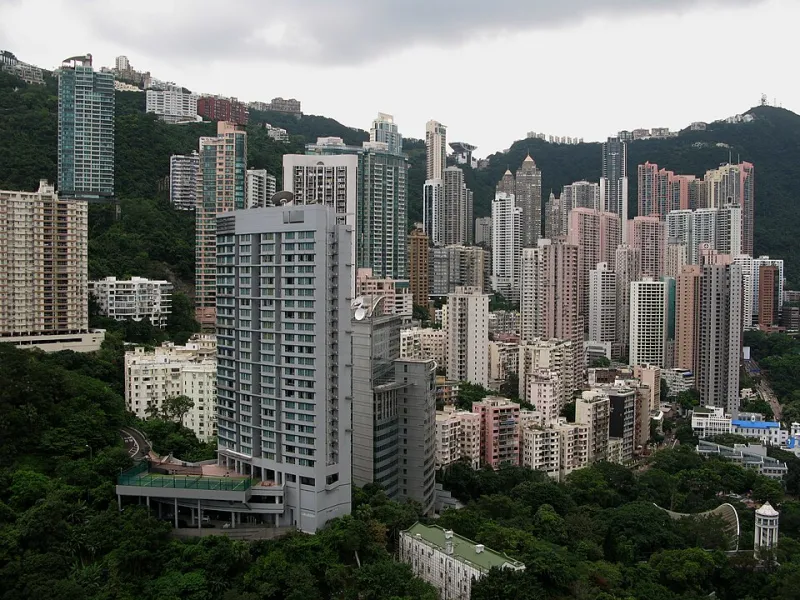
Mid-rise living addresses this tension in a structural way. The vertical separation inherent to apartment-style living creates natural psychological compartmentalization. Your floor is your domain. The street, with its ambient noise and visual distraction, exists several stories below. That physical buffer — even just four or five floors — registers in the nervous system as distance. And distance, in cognitive terms, is clarity.
What Natural Light Actually Does to Your Workday
Sunlight is not merely aesthetic. It is a biological regulator. Exposure to natural light during working hours synchronizes the body's circadian rhythm, improving alertness in the morning, sustaining focus through midday, and allowing for genuine mental wind-down in the evening. This cycle — so often disrupted in basement offices, interior rooms, or heavily shaded suburban lots — flows naturally in a mid-rise unit positioned to receive consistent daylight from multiple angles.
At Gowra Urban Winds, the orientation and spacing of buildings within the development is designed to maximize this exposure. Units receive direct and indirect light throughout the day, which means the person working at a desk near the window isn't just enjoying a pleasant atmosphere — they are benefiting from a neurologically supportive environment that suburban floor plans rarely provide by default.
The Air You Think In
Air quality is a productivity variable that almost no one discusses, and yet the evidence is substantial. Elevated indoor carbon dioxide levels — common in sealed, poorly ventilated spaces — have been directly linked to reduced cognitive performance, including slower response times and diminished capacity for complex reasoning. This is not a minor inconvenience. For knowledge workers who spend six to ten hours a day in an enclosed space, the cumulative effect is significant.
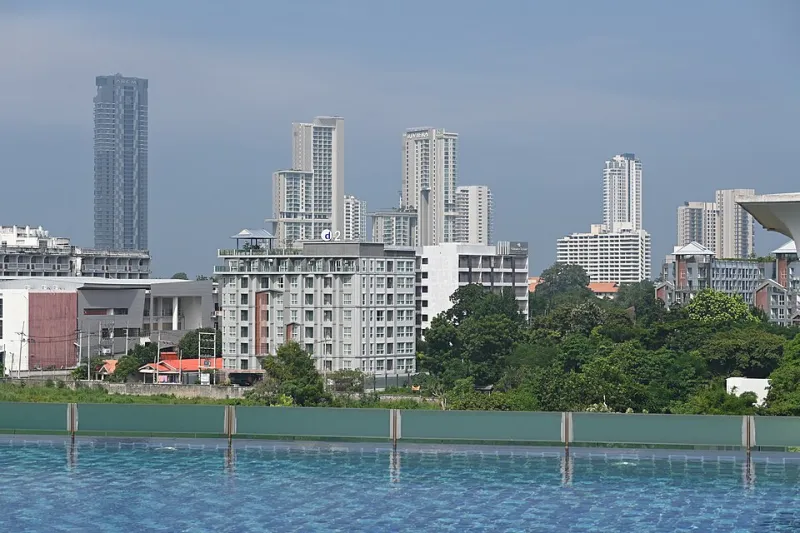
Living in a natural wind corridor changes this equation. When cross-ventilation is built into the architectural logic of a building — when prevailing breezes move through units rather than around them — indoor air quality improves passively, without mechanical intervention. Open a window at Gowra Urban Winds and the air that enters has traveled across open sky, not along a congested street-level corridor. That distinction matters, both for health and for the quality of thought that happens inside those walls.
Proximity as a Productivity Tool
One underappreciated advantage of urban mid-rise living for remote workers is the proximity to what might be called "productive friction" — the coffee shop, the walking path, the rooftop garden, the lobby with a comfortable chair and a different ceiling. These spaces serve as informal third environments: not home, not a formal office, but somewhere in between that the brain interprets as permission to shift gears.
Suburban remote workers often drive ten or fifteen minutes to access this kind of mental reset. In a mid-rise community like Gowra Urban Winds, the equivalent is an elevator ride. Shared amenity spaces, landscaped outdoor areas, and the building's own varied environments become extensions of the work-from-home setup — places to take a call, think through a problem, or simply decompress between tasks without losing the thread of the day.
Vertical Rhythm and the Shape of a Productive Day
There is something to be said for the rhythms that high-density vertical living imposes — not intrusively, but gently. The sounds of neighbors beginning their mornings, the shift in light as the sun moves across a city skyline, the natural activity patterns of a community going about its day: these cues serve as soft temporal anchors. For remote workers who struggle with the formlessness of an unstructured schedule, this ambient social rhythm can function as a kind of collective clock.
Researchers studying work-from-home productivity have found that one of the most common complaints among remote workers is not distraction, but the opposite: a kind of temporal drift in which hours blur together and the boundaries between work and rest dissolve. Environments with natural social and environmental cues — movement, light change, ambient sound at a managed level — help counteract this drift. Mid-rise urban living, by its nature, provides these cues.
The Design Consideration That Changes Everything
For buyers evaluating a home with remote work in mind, the typical checklist — closet space, kitchen finishes, parking — should be supplemented with a different set of questions. How does light move through this unit across a full day? Is there cross-ventilation, or does the air feel static? Is there physical and acoustic separation from street-level activity? Are there amenity spaces nearby that can serve as informal work environments when the primary desk needs a rest?
At Gowra Urban Winds, these questions have answers built into the development's design philosophy. The architecture prioritizes airflow, natural light, and a layered relationship between private interiors and accessible outdoor spaces. For the remote professional — and increasingly, that is a permanent category, not a temporary accommodation — these features are not luxuries. They are the infrastructure of a functional working life.
A New Standard for the Home That Works
The work-from-home era has exposed a simple truth: not all residential environments support professional performance equally. The home that was adequate for evenings and weekends is not automatically the home that supports eight hours of focused, creative, or analytical work. That realization is shifting what buyers prioritize, and it is validating what mid-rise urban living — at its best — has always offered.
Elevation above street noise. Air that moves. Light that follows the sun. A community that provides rhythm without demanding attention. These are the conditions under which people do their best thinking. And at Gowra Urban Winds, they are conditions that come standard.