Quiet in Motion: The Surprising Acoustic Science of Living Where the Wind Blows
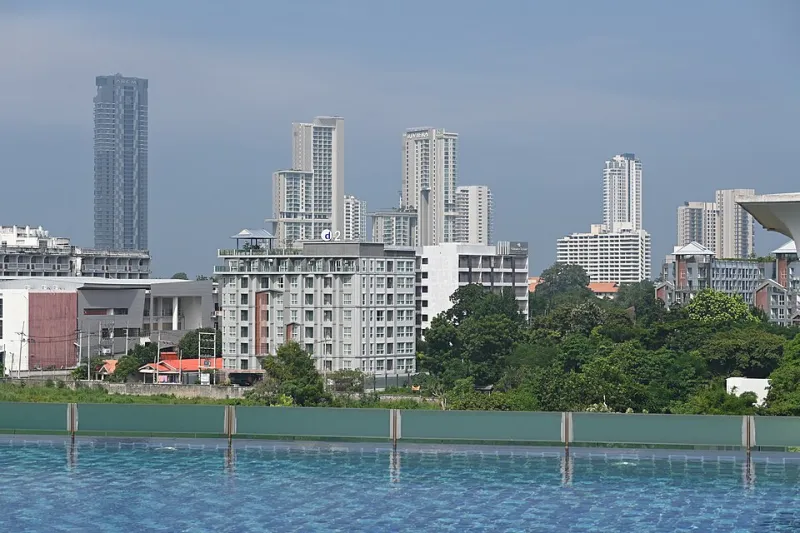
Photo: PattayaPatrol, CC BY-SA 4.0, via Wikimedia Commons
The Assumption That Gets It Backwards
Ask most apartment hunters what they want in an urban home, and "quiet" lands near the top of every list. Ask them whether they associate wind with quiet, and most will laugh. Wind, in the popular imagination, is noise — it rattles windows, whistles through gaps, and carries the cacophony of the street directly into your living room.
That assumption, it turns out, is almost entirely wrong.
The relationship between air movement and acoustic comfort is far more nuanced than common intuition suggests. In fact, when ventilation is designed with intention — when wind corridors are shaped by architecture rather than left to chance — the result is not more noise, but measurably less of the kind that disrupts sleep, concentration, and general well-being. This is one of the quieter selling points of Gowra Urban Winds, and it deserves a proper explanation.
What Urban Noise Actually Is
Before exploring how wind can reduce noise, it helps to understand what urban noise really consists of. The sounds that drive city residents to the brink — the ones that make people stuff their ears with foam and hang blackout curtains — are not uniform. They fall into a few distinct categories.
First, there is impulsive noise: sudden, sharp sounds like car horns, construction impacts, and the percussive bang of a dumpster lid. These are high-amplitude, short-duration events that the human nervous system registers as threats, triggering stress responses even during sleep.
Second, there is low-frequency drone: the persistent hum of traffic, HVAC equipment on neighboring rooftops, and subway vibration traveling through building foundations. This variety is particularly insidious because it is often felt as much as heard, and conventional soundproofing materials do relatively little to stop it.
Third, there is what acoustic engineers call "intermittent intrusion" — voices, music, sirens — sounds that appear and disappear unpredictably, making them disproportionately disruptive to concentration and rest.
Each of these categories responds differently to the presence of ambient airflow. And in each case, the response is more favorable than most people expect.
The Masking Effect: Nature's White Noise Machine
Acoustic masking is a well-documented phenomenon in which one sound reduces the perceived prominence of another. It is the principle behind white noise machines, the soft music played in open-plan offices, and the deliberate introduction of water features in urban parks.
Natural wind, moving steadily through a thoughtfully designed building corridor, produces a broadband ambient sound — one that spans a wide range of frequencies. This gentle, consistent airflow sound acts as a natural acoustic mask, effectively blurring the sharp edges of impulsive noises and reducing the perceived contrast between silence and sudden intrusion.
In practical terms, a resident sleeping near a naturally ventilated window at Gowra Urban Winds may experience a passing siren not as a jarring interruption but as a muted, distant event — one that does not fully cross the threshold of wakefulness. The steady, low-level presence of moving air has essentially raised the floor of ambient sound in the most benign way possible.
Dispersion: How Wind Breaks Up Sound Waves
Beyond masking, there is a second acoustic mechanism at work in well-designed wind corridors: dispersion. Sound travels in waves, and like all waves, it behaves predictably in still air. It radiates outward from its source and reflects off hard surfaces — the glass facades of office towers, the concrete faces of parking structures, the asphalt of city streets — bouncing and amplifying as it goes.
Moving air disrupts this orderly propagation. Wind creates turbulence in the acoustic medium itself, scattering sound waves and reducing the coherence with which they travel. This is why outdoor concerts sound different on a breezy evening than on a still one, and why architects designing performance venues go to considerable lengths to control airflow within the space.
In an urban residential context, the same principle works in the resident's favor. The wind corridors that characterize the Gowra Urban Winds site do not merely allow air to pass through — they actively interrupt the straight-line travel of street-level noise toward upper-floor windows. Sound that might otherwise arrive with full force is scattered, attenuated, and partially absorbed before it reaches a bedroom or living area.
The Mid-Rise Advantage
Building height matters enormously in this equation. Ground-floor and low-rise residents are subject to street noise at its most concentrated — close to the source, surrounded by reflective surfaces, with little vertical distance to allow natural dispersion.
At the mid-rise elevations characteristic of Gowra Urban Winds, something shifts. Residents are elevated above the densest acoustic environment while remaining close enough to the ground to benefit from cross-ventilation rather than the unpredictable, high-velocity winds that buffet the upper floors of supertall towers. It is, acoustically speaking, a sweet spot — high enough to escape the worst of the street, low enough to enjoy the steadying influence of consistent, moderate airflow.
This is not accidental. The architectural orientation of Gowra Urban Winds was developed with an understanding that prevailing wind patterns at mid-rise elevations in this corridor provide consistent, moderate airflow — exactly the conditions under which the masking and dispersion effects described above operate most reliably.
Designing for Acoustic Comfort
The acoustic benefits of natural ventilation do not arrive automatically. They require deliberate design choices: the orientation of facades relative to prevailing winds, the placement and sizing of operable windows, the configuration of shared outdoor spaces to channel rather than redirect beneficial airflow, and the selection of materials that absorb rather than reflect sound at key points in the building envelope.
At Gowra Urban Winds, these considerations are embedded in the development's core design philosophy. Balconies are positioned not merely for views but to create gentle turbulence that disperses rising street noise. Landscaping along the building perimeter serves a dual function — it is both visually appealing and acoustically beneficial, with dense plantings absorbing mid-frequency sounds before they reach living spaces.
The result is a residential environment that offers something genuinely rare in American urban real estate: the sensory experience of openness and connection to the outdoors, combined with the acoustic tranquility that most buyers assume can only be achieved by sealing themselves indoors.
Rethinking What Quiet Means in the City
There is a broader point worth making here. The conventional approach to urban acoustic comfort is essentially defensive: seal the building, add mass to the walls, install triple-pane glass, and hope that the outside world cannot penetrate. This approach trades one problem for another, producing interiors that are quiet but also sealed, still, and subtly oppressive.
The approach embodied at Gowra Urban Winds is different in kind. Rather than treating the urban environment as an adversary to be blocked out, it treats natural airflow as a resource to be harnessed — one that, when properly directed, creates a living experience that is simultaneously open and serene.
For buyers who have long assumed they must choose between the vitality of city life and the peace of a quieter setting, that distinction is worth sitting with. The wind, it turns out, is not the problem. In the right hands, it is part of the solution.