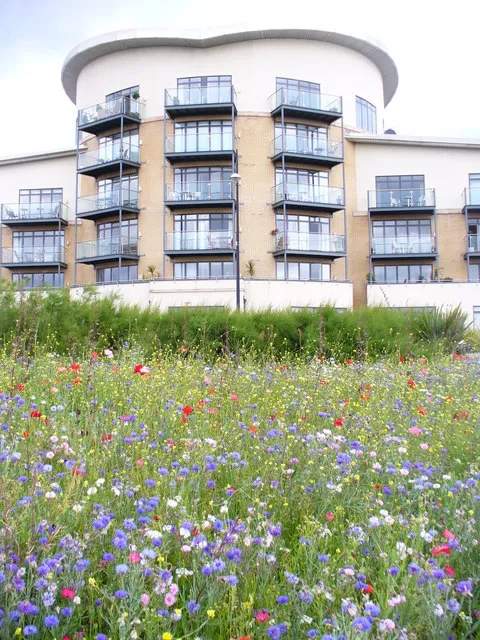
The Five-to-Fifteen Story Sweet Spot: Why Younger Buyers Are Choosing Mid-Rise Over Everything Else
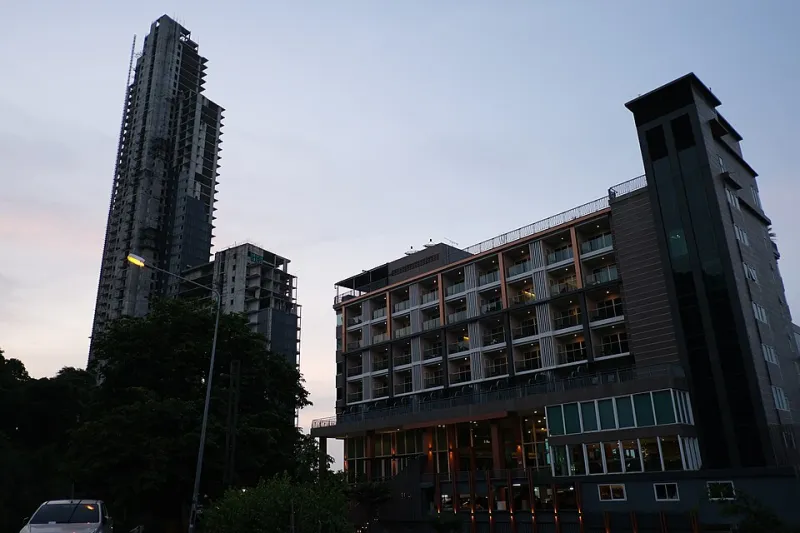
Photo: PattayaPatrol, CC BY-SA 4.0, via Wikimedia Commons
For the better part of two decades, the aspirational narrative of urban homeownership pointed in one of two directions: toward the glossy tower penthouse with its panoramic views and white-glove amenities, or toward the suburban single-family home with its yard, its garage, and its implied declaration of arrival. Younger, affluent buyers were expected to want one or the other — eventually.
Increasingly, they want neither.
Across major U.S. metropolitan areas, a distinct and growing cohort of buyers between the ages of 28 and 45 is gravitating toward mid-rise residential developments — typically between five and fifteen stories — with a clarity of preference that is reshaping how developers, brokers, and urban planners think about the market. These buyers are not settling for mid-rise as a compromise. They are choosing it deliberately, for reasons that are as much philosophical as they are financial.
The Rejection of the Tower Myth
The allure of the high-rise has always been partially aspirational and partially theatrical. The 40th-floor unit signals something — about status, about arrival, about a particular relationship to the city below. But for many buyers under 45, that signal has begun to feel disconnected from the way they actually want to live.
"I toured three luxury towers before I found Gowra Urban Winds," says Daniel Reyes, 36, a product manager who purchased a two-bedroom unit at the development last year. "The penthouses were stunning, honestly. But every time I was in those buildings, I felt like I was passing through a hotel lobby, not coming home. There was no sense that anyone knew anyone else."
That observation — the hotel-lobby feeling — recurs with notable frequency among buyers who have toured ultra-luxury towers and ultimately chosen mid-rise alternatives. High-rise developments, particularly at the luxury tier, are often optimized for visual spectacle and amenity programming rather than for the quieter social infrastructure that makes a residential community feel inhabited.
Mid-rise buildings, by contrast, tend to produce what urban sociologists call "casual contact density" — the frequency of low-stakes encounters between neighbors in hallways, elevators, shared courtyards, and building entrances that gradually accumulate into genuine community. In a twelve-story building with a modest number of units per floor, residents learn each other's faces, names, and rhythms in ways that rarely happen in a 60-story tower with hundreds of anonymous units.
The Suburban Exit, Reconsidered
On the other end of the spectrum, suburban homeownership — long positioned as the inevitable destination for buyers who "get serious" about their lives — has lost considerable appeal among this demographic, and not merely for the reasons typically cited in trend pieces about millennials and avocado toast.
The structural realities of suburban living have shifted. Remote and hybrid work arrangements have reduced, but not eliminated, the commute calculus that once made suburban proximity to transit corridors a reasonable trade-off. Meanwhile, the maintenance burden of single-family homeownership, combined with the social isolation that characterizes many post-war suburban developments, has prompted a genuine reassessment.
"I grew up in the suburbs outside of Columbus," says Priya Anand, 41, who purchased at Gowra Urban Winds with her partner two years ago. "I know exactly what that life looks like. It's a lot of driving and a lot of lawn care and a lot of waving at neighbors you never actually talk to. That's not what we wanted in our forties."
What Priya and her partner wanted — and found — was walkability, urban cultural access, a sense of vertical connection to the sky without the disorientation of extreme height, and a building community that felt genuinely residential rather than transactional.
The Price-Per-Square-Foot Advantage
Beyond lifestyle considerations, mid-rise urban living offers a financial proposition that is difficult to ignore when examined carefully.
In most major U.S. markets, ultra-luxury high-rise units carry a significant premium per square foot that reflects not the livability of the space but the cost of constructing and maintaining the tower itself — elevators, structural engineering, mechanical systems, and the concierge programming that justifies the price point. Buyers at the top of those buildings are paying, in part, for the building's own ambition.
Mid-rise developments, operating with lower construction cost structures, can deliver comparable or superior finishes, thoughtful design, and meaningful amenity packages at more favorable per-square-foot pricing. For buyers who are allocating capital carefully — many of whom are also managing student loan obligations, funding retirement accounts, and navigating a high-interest-rate borrowing environment — that efficiency matters.
Market data from the National Association of Realtors and various regional MLS analyses consistently show that well-located mid-rise urban condominiums have demonstrated strong appreciation trajectories over the past decade, particularly in markets where urban in-migration has sustained demand. The combination of relative affordability at purchase and solid appreciation potential makes the asset case for mid-rise ownership genuinely compelling.
Sky Without Vertigo
There is also something less quantifiable at play — a relationship to light, air, and open sky that mid-rise living enables in ways that both the basement-level suburban ranch and the 50th-floor tower do not.
At Gowra Urban Winds, the development's name reflects a design philosophy rooted in exactly this quality. Units positioned across a thoughtfully scaled mid-rise profile receive unobstructed sky exposure, genuine natural light across multiple times of day, and — critically — the kind of connection to prevailing breezes and ambient outdoor conditions that makes a home feel alive rather than sealed.
Buyers describe this quality in sensory terms. "On a clear morning, my living room fills with light from the east and I can feel the air moving through from the windows on the opposite side," says Marcus Webb, 33, a financial analyst who moved into the development eight months ago. "That sounds like a small thing, but it changes how you feel in your own home every single day."
For a generation that came of age during a period of heightened awareness around wellness, indoor air quality, and the psychological dimensions of built environments, that daily sensory experience is not a small thing at all. It is, for many, the point.
What This Means for the Market
The preference shift toward mid-rise urban living among buyers under 45 carries implications that extend beyond individual purchase decisions. Developers, municipalities, and urban planners are beginning to recognize that the mid-rise typology — long overshadowed by the glamour of the tower and the political simplicity of single-family zoning — represents a productive middle path for cities seeking to add density without sacrificing livability.
For buyers navigating this market, the opportunity is real and the window is meaningful. Developments like Gowra Urban Winds, which have invested in the design quality, community infrastructure, and environmental thoughtfulness that this demographic prizes, are not simply responding to a trend. They are helping to define what the next chapter of American urban living looks like.
The penthouse will always have its admirers. But for a growing number of buyers who know precisely what they want — and what they don't — the sweet spot is somewhere in the middle, where the sky is close, the community is genuine, and the wind still finds its way through.