Breathing Easy: How Urban Wind Corridors Are Quietly Transforming Apartment Living
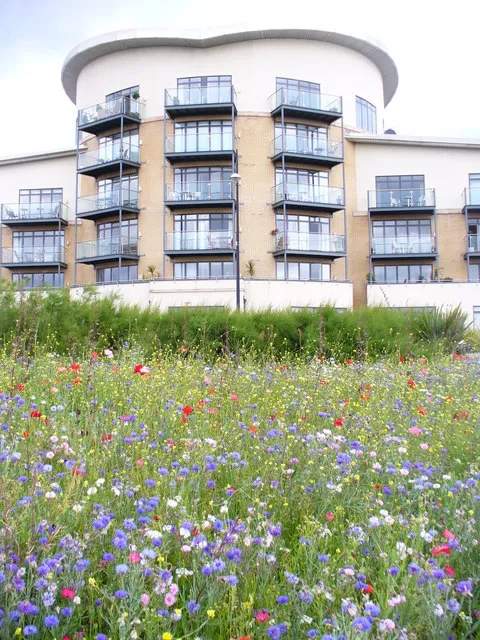
Photo: Colin Smith, CC BY-SA 2.0, via Wikimedia Commons
When prospective residents tour a new apartment, they evaluate countertops, closet space, and city views. Rarely does anyone pause to ask: Where does the breeze come from? Yet that question — deceptively simple — sits at the heart of what separates a merely comfortable home from an exceptional one. At Gowra Urban Winds, the movement of air is treated as a design asset, not a meteorological accident.
Understanding why requires a brief journey into the science of urban airflow — and a look at how forward-thinking architects are harnessing it.
The Science of Wind in the City
Urban environments generate their own microclimates. Dense concentrations of buildings, pavement, and human activity trap heat in what scientists call the urban heat island effect, raising temperatures several degrees above surrounding suburban or rural areas. In cities across the American Sun Belt — from Phoenix to Atlanta — this effect is particularly pronounced, making natural cooling strategies not merely pleasant but genuinely important for resident well-being.
Wind corridors, sometimes called urban canyons, form when prevailing breezes channel between and around structures. When a development is deliberately oriented to capture and guide these flows, the results cascade through every aspect of the living experience. Indoor air is refreshed more frequently. Surface temperatures drop. The demand on mechanical cooling systems decreases substantially.
According to research published by the American Society of Heating, Refrigerating and Air-Conditioning Engineers (ASHRAE), buildings designed with passive ventilation strategies in mind can reduce HVAC energy consumption by 20 to 40 percent compared to conventionally designed structures. That figure translates directly into lower utility bills and a reduced environmental footprint — two priorities that resonate deeply with today's urban homebuyer.
Designing for the Prevailing Breeze
Architects who specialize in sustainable residential development describe natural ventilation design as a discipline that demands both data and intuition. Before a single wall goes up, teams study local wind-rose diagrams — visual maps that illustrate the direction and frequency of prevailing winds at a specific site throughout the year. This data informs everything from building orientation and tower spacing to the placement of operable windows, balconies, and shared outdoor corridors.
"You're essentially choreographing air," explains one urban design consultant who has worked on mixed-use residential projects across the Midwest and Southeast. "The goal is to create pathways that invite air in at the lower floors, allow it to circulate through living spaces, and exhaust heat at the upper levels. When you get it right, residents feel the difference immediately — even if they can't articulate exactly why."
At Gowra Urban Winds, this philosophy is embedded in the development's very identity. The community's siting, building geometry, and landscaping have been conceived in concert to capture prevailing breezes and distribute their benefits throughout the residential towers and ground-level amenity spaces alike. Wide setbacks between structures prevent the stagnant air pockets common in tightly packed urban blocks. Strategically placed green corridors — planted with native grasses and shade trees — cool incoming air before it reaches residential facades, a passive technique known as evapotranspirative cooling.
The Indoor Air Quality Dividend
Beyond thermal comfort, natural ventilation carries significant implications for indoor air quality — a concern that gained renewed public attention in the wake of the COVID-19 pandemic and has remained a priority for health-conscious buyers ever since.
Conventional sealed buildings rely on recirculated air filtered through HVAC systems. While modern filtration technology is sophisticated, no mechanical system fully replicates the dilution effect of genuine outdoor air exchange. Volatile organic compounds (VOCs) emitted by furniture, flooring, and cleaning products accumulate more readily in tightly sealed environments. Humidity imbalances — too dry in winter, too humid in summer — can exacerbate respiratory conditions and promote mold growth.
Residences designed around natural ventilation principles experience higher air change rates, meaning the air inside is refreshed more frequently with fresh outdoor air. For families with young children, elderly residents, or anyone managing asthma or allergies, this distinction is not trivial. It is, in the most literal sense, a quality-of-life advantage.
The Noise Paradox Resolved
Skeptics sometimes raise a fair objection: doesn't opening a building to natural airflow also invite urban noise? It's a reasonable concern, and one that sophisticated design addresses head-on. The same careful attention to building orientation that captures beneficial breezes also informs acoustic planning. At Gowra Urban Winds, residential units are oriented so that primary living spaces — bedrooms, living rooms, home offices — face away from major traffic corridors and toward interior courtyards or open-sky amenity areas.
Double-glazed operable windows allow residents to enjoy natural ventilation when ambient noise levels permit, while providing effective acoustic insulation during busier periods. Landscape buffers, including dense plantings and water features, absorb and deflect sound waves before they reach inhabited spaces. The result is a home that breathes freely without surrendering the tranquility that urban residents rightly demand.
This is the paradox resolved: thoughtful wind design doesn't trade comfort for comfort. It compounds it.
A Sustainable Choice That Pays Forward
For buyers evaluating long-term value — and in today's market, that calculation matters more than ever — the energy efficiency advantages of natural ventilation design represent a meaningful financial consideration. Lower monthly utility costs compound over time. Buildings with proven sustainability credentials increasingly command premium resale values as environmental standards tighten and buyer awareness grows.
Beyond the financial case, there is something more elemental at work. A home that breathes naturally, that connects its occupants to the rhythms of weather and season, offers a quality of daily experience that mechanical systems simply cannot replicate. The gentle movement of air through a well-designed space is, in its quiet way, one of the most civilized pleasures a home can offer.
At Gowra Urban Winds, that pleasure is not incidental. It is, quite deliberately, by design.