The Green Premium: Why Homes Near Open Spaces Are Worth More — and Feel Like More
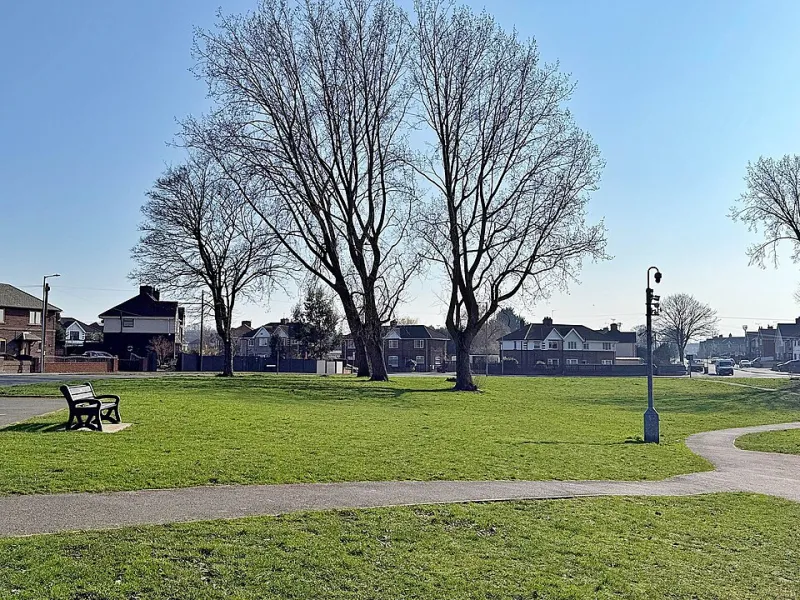
Photo: Graham Hogg , CC BY-SA 2.0, via Wikimedia Commons
In real estate, location has always been the foundational variable. Proximity to quality schools, transit corridors, employment centers, and retail districts has long defined how appraisers assign value and how buyers prioritize their search. Over the past two decades, however, a quieter but equally powerful variable has entered the equation with increasing force: access to green space, natural airflow, and open-air environments. The data behind this shift is substantial — and for buyers evaluating urban residential options, it represents a lens through which the true value of a property can be more clearly understood.
What the Research Actually Shows
The relationship between green space proximity and property value is among the most thoroughly studied topics in urban economics. A landmark analysis by the Trust for Public Land found that homes within a quarter mile of a park command a price premium of between 8 and 20 percent compared to comparable properties located farther from open space. That premium is not static — it tends to increase over time as urban density rises and the scarcity of accessible green environments becomes more pronounced.
The Lincoln Institute of Land Policy, in a comprehensive review of studies conducted across major American cities, concluded that the value uplift associated with park proximity is consistent across income brackets, housing types, and regional markets. Whether examining single-family homes in Atlanta, condominiums in Minneapolis, or townhomes in Phoenix, the pattern holds: green adjacency translates to measurable, durable financial value.
Beyond raw appreciation, properties near open spaces also demonstrate lower vacancy rates, faster absorption times when listed for sale, and stronger tenant retention in rental markets. These characteristics compound over time, making green-adjacent real estate a structurally sound component of a long-term investment strategy.
The Science of Air, Space, and Human Well-Being
The economic premium attached to green space proximity is not arbitrary — it reflects something deeply rooted in human physiology and psychology. Exposure to natural environments, even in brief and intermittent doses, has been shown to reduce cortisol levels, lower blood pressure, improve sleep quality, and enhance cognitive performance. These are not marginal effects. A 2019 study published in Scientific Reports found that spending as little as two hours per week in nature produced significant and measurable improvements in self-reported health and well-being across a sample of nearly 20,000 participants.
Natural ventilation adds another dimension to this wellness calculus. Urban environments that incorporate wind corridors — intentional pathways through the built environment that allow air to circulate freely — offer residents a form of passive climate management that reduces reliance on mechanical cooling, improves air quality, and creates the kind of ambient comfort that makes outdoor spaces genuinely inviting rather than merely decorative. Cities like Chicago have long understood this principle; the famous lakefront wind that locals both complain about and quietly celebrate is, in architectural terms, one of the city's most valuable quality-of-life assets.
The implications for residential development are significant. Buildings and communities designed to work with natural airflow patterns rather than against them provide residents with a fundamentally different living experience — one characterized by fresher indoor air, more comfortable outdoor spaces, and a subtler but pervasive sense of environmental harmony.
How Urban Planners Are Responding
Forward-thinking urban planners across the United States have begun integrating these insights into the frameworks that govern new development. Cities including Portland, Oregon; Austin, Texas; and Raleigh, North Carolina have adopted green corridor requirements that mandate the preservation or creation of continuous open-space networks connecting parks, trails, and natural areas through otherwise dense urban fabric.
These corridors serve multiple functions simultaneously. They provide recreational infrastructure for residents, manage stormwater more effectively than conventional impervious surfaces, reduce the urban heat island effect, support biodiversity, and — critically — increase the value of surrounding properties in ways that generate increased tax revenue for municipalities. The virtuous cycle is well-documented: investment in green infrastructure drives property value appreciation, which funds further public investment, which drives further appreciation.
Developers who recognize this dynamic early — and who position their projects within or adjacent to these green networks — capture a disproportionate share of the resulting value. Those who ignore it tend to find their properties competing on narrower margins in markets where differentiation is increasingly difficult to achieve.
Gowra Urban Winds: A Strategic Position Worth Examining
The name Gowra Urban Winds is not incidental. It reflects a deliberate orientation toward the natural forces — air, openness, sky — that the development's designers identified as both environmentally significant and profoundly desirable to the residents they sought to attract. That orientation manifests in the development's physical positioning, its architectural approach, and the specific amenities it offers.
Gowra Urban Winds is situated with direct consideration of its relationship to surrounding open spaces and natural ventilation patterns. The development's design incorporates setbacks, building orientations, and landscape features that channel prevailing breezes through communal areas, reducing ambient temperatures, improving air quality, and creating outdoor environments that residents genuinely want to occupy. This is not a passive outcome of favorable geography — it is the result of intentional planning informed by an understanding of how air movement shapes lived experience.
For prospective buyers evaluating the investment dimension of a purchase at Gowra Urban Winds, the proximity to green space and the wind-conscious design of the development represent concrete, data-supported sources of long-term value. Markets reward scarcity, and in dense urban environments, the combination of thoughtful green adjacency and natural ventilation design is genuinely scarce.
Beyond the Balance Sheet: The Quality-of-Life Case
Investment analysis, however thorough, captures only part of what makes a home valuable. The morning walk to a nearby park before the workday begins, the afternoon breeze that makes a rooftop terrace genuinely comfortable in July, the evening air that carries the faint scent of flowering trees rather than exhaust — these are experiences that resist quantification but define the texture of daily life in ways that matter enormously to residents over time.
Health-conscious buyers, in particular, have grown increasingly sophisticated in their evaluation of residential environments. They are asking not merely how large the unit is or how close the nearest coffee shop might be, but how the development supports their physical and mental wellness on an ongoing basis. Access to walkable green space, quality outdoor air, and environments designed to encourage movement and social connection are no longer aspirational extras — they are baseline requirements for a growing segment of the American homebuying market.
A Convergence of Value and Vision
The most compelling residential investments are those in which financial prudence and personal aspiration point in the same direction. Properties near green spaces and natural ventilation corridors satisfy both criteria simultaneously — they represent sound economic choices supported by decades of market data, and they offer a quality of life that genuinely enriches the experience of coming home each day.
At Gowra Urban Winds, that convergence has been built into the development's DNA. The strategic positioning near open spaces, the wind-responsive design, and the commitment to outdoor living amenities are not marketing embellishments — they are the structural foundations of a community designed to appreciate in value and in meaning over time. For forward-thinking buyers who understand that the best investments are those that serve both the portfolio and the person, Gowra Urban Winds represents exactly the kind of opportunity that rewards careful attention.