What the Breeze Knows: The Hidden Connection Between Air Flow and Home Value

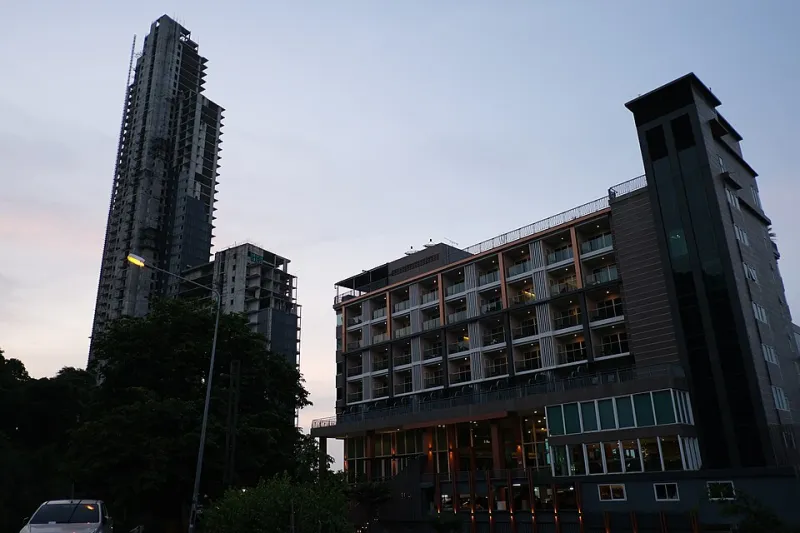
Photo: Juanity41, CC BY-SA 3.0, via Wikimedia Commons
When prospective buyers walk through an urban apartment for the first time, they notice the countertops, the ceiling height, the view. Rarely do they pause to consider the invisible architecture moving through the space — the airflow patterns that will, over years of occupancy, shape everything from their respiratory health to the eventual resale price of their home.
That oversight is becoming increasingly costly.
Across the United States, a growing body of research, appraisal data, and architectural practice is establishing a clear relationship between deliberate natural ventilation design and measurable property premiums. At Gowra Urban Winds, where the very name reflects a foundational commitment to harnessing the movement of air, this principle is not a marketing footnote — it is a structural philosophy embedded into every siting decision, floor plan orientation, and façade configuration on the property.
The Science Behind the Draft
Natural ventilation operates on two primary physical mechanisms: cross-ventilation, in which air enters through one side of a unit and exits through the opposite side, and stack ventilation, in which warm air rises and escapes through higher openings as cooler air is drawn in below. Both require intentional architectural coordination that begins long before a foundation is poured.
"The orientation of a building relative to prevailing wind directions is one of the most consequential decisions a development team makes," says Marcus Elroy, a licensed architect with more than two decades of experience in urban residential design. "Once you've placed that structure on the site, you've either captured the wind or you haven't. You can't retrofit your way out of a bad siting decision."
Developers who prioritize ventilation modeling during the design phase — analyzing local wind roses, seasonal pressure gradients, and the interference patterns created by neighboring structures — create homes that breathe. Those who do not create homes that rely almost entirely on mechanical HVAC systems, with consequences that extend well beyond utility bills.
The Financial Case for Breathing Room
The appraisal community has begun formalizing what many buyers have sensed intuitively. Properties with documented natural ventilation advantages — whether through certified green building ratings, energy performance disclosures, or architectural specifications — are achieving consistent premiums in urban markets from Seattle to Miami.
According to data compiled by the Urban Land Institute, energy-efficient residential buildings with superior indoor air quality features command between 7 and 11 percent higher sale prices compared to comparable units lacking those characteristics. In dense metropolitan markets where per-square-foot pricing is already elevated, that differential represents a substantial dollar figure.
Certified residential appraiser Linda Chao, who specializes in urban multifamily properties in the Mid-Atlantic region, notes that her methodology has adapted accordingly. "I now request ventilation specifications as part of my standard data collection on urban residential assignments," she explains. "Buildings that demonstrate passive airflow design — not just HVAC capacity — hold value more predictably over time. Buyers are asking about it, and lenders are starting to pay attention."
The resale dynamic is equally compelling. Homes with natural ventilation design age more gracefully because they accumulate fewer of the indoor air quality problems — moisture, particulate buildup, volatile organic compounds from building materials — that quietly degrade both living conditions and property condition over time.
Health as a Value Multiplier
The financial premium attached to natural ventilation is not arbitrary. It reflects a genuine, research-supported relationship between indoor air quality and human health outcomes — a connection that the COVID-19 pandemic brought into sharp public consciousness and that has not receded from buyer awareness since.
The Environmental Protection Agency has long identified indoor air pollution as one of the top five environmental risks to public health, noting that Americans spend approximately 90 percent of their time indoors. In urban apartments where windows face interior courtyards, where units stack without through-ventilation, or where building orientation blocks prevailing breezes, indoor pollutant concentrations can run two to five times higher than outdoor levels.
Conversely, units designed with cross-ventilation opportunities — where a resident can open windows on opposing walls and feel a genuine exchange of air — demonstrate measurably lower concentrations of carbon dioxide, humidity, and airborne particulates. The health outcomes associated with these environments include reduced incidence of respiratory illness, improved sleep quality, and lower rates of mold-related structural damage.
For buyers evaluating long-term ownership costs, that last point carries particular weight. Mold remediation in a poorly ventilated urban apartment can cost tens of thousands of dollars and, if disclosed, materially impacts resale value. A home designed to breathe is, in a meaningful sense, a home designed to protect its own asset value.
What Gowra Urban Winds Gets Right
At Gowra Urban Winds, the development's positioning reflects a studied response to the ventilation science outlined above. Building orientations were determined in part through wind analysis specific to the site's geographic context, ensuring that primary living spaces — not utility corridors or secondary bedrooms — receive the benefit of prevailing breezes. Floor plans are configured to allow genuine cross-ventilation rather than single-exposure layouts that trap stale air.
The result is a residential environment where the wind is not incidental — it is infrastructural. Residents experience lower cooling loads during summer months, reduced dependence on mechanical air circulation, and the kind of ambient freshness that is difficult to articulate in a listing description but immediately apparent upon entering a unit.
For buyers who intend to hold their investment for five, ten, or fifteen years, these characteristics compound. A home that breathes well today will breathe well a decade from now — and the market will continue to reward it accordingly.
What Buyers Should Ask
For those evaluating urban residential properties beyond Gowra Urban Winds, the following questions offer a practical framework for assessing ventilation quality:
- Does the unit have openings on more than one exterior wall? Single-exposure units cannot achieve true cross-ventilation regardless of window size.
- What is the building's orientation relative to prevailing seasonal winds? A real estate agent or the developer's architectural team should be able to answer this directly.
- Does the development carry any green building certification — LEED, WELL, or Energy Star — that includes indoor air quality components?
- What is the mechanical ventilation backup system? Even well-designed passive ventilation benefits from a quality ERV or HRV system for periods of extreme weather.
- Has the developer published any energy performance modeling that addresses airflow and thermal comfort?
The answers to these questions will not appear in a standard listing. But they will appear, eventually, in the property's maintenance history, its utility costs, and its resale trajectory.
The wind, it turns out, has always known something the market is only now beginning to price correctly.