The Cortisol Connection: How Natural Air Circulation in Your Neighborhood Quietly Rewires Your Stress Response

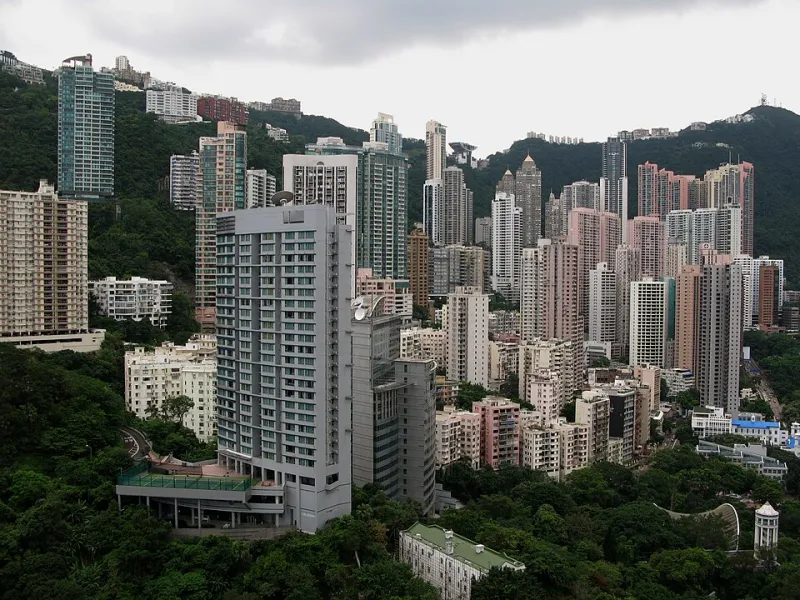
Photo by Photo by Mohamad Kazemi on Unsplash on Unsplash
Most homebuyers spend considerable time evaluating square footage, kitchen finishes, and proximity to good schools. Very few think to ask: How does the air move here? Yet a growing body of research suggests that question may be among the most consequential ones a prospective resident can pose. The way wind behaves in a neighborhood — whether it flows freely or stagnates between towers and asphalt — appears to have a measurable effect on the stress hormones circulating through the bodies of the people who live there.
This is not a minor footnote in residential wellness literature. It is becoming a central chapter.
What Cortisol Has to Do With Where You Live
Cortisol is the body's primary stress hormone. Released by the adrenal glands in response to perceived threats or environmental pressures, it governs everything from inflammation and immune response to sleep quality and mood regulation. Chronic elevation of cortisol — the kind that accumulates quietly over months and years of urban living — has been associated with cardiovascular disease, impaired cognitive function, weight gain, and heightened anxiety disorders.
Urban environments, by their nature, tend to push cortisol upward. Noise, crowding, air pollution, and the relentless visual and social stimulation of dense city life all activate the body's stress-response systems. What researchers have begun to examine more carefully, however, is whether some urban environments are more physiologically forgiving than others — and whether natural ventilation patterns play a meaningful role in that distinction.
A 2022 analysis published in Environmental Health Perspectives found that residents in neighborhoods with measurably better air quality and airflow reported significantly lower self-assessed stress and demonstrated lower morning cortisol levels than demographically comparable residents in stagnant-air districts just miles away. The researchers controlled for income, noise exposure, and green space access. The air movement variable held.
The Invisible Architecture of a Wind Corridor
Not all urban air is created equal, and not all neighborhoods receive the same quality of airflow. A wind corridor — a geographic or architectural channel through which prevailing breezes move with regularity and relative unobstructed force — creates a fundamentally different microenvironment than a typical urban block. Particulate matter disperses more effectively. Volatile organic compounds from traffic and construction dissipate rather than accumulate. The ambient temperature drops during warmer months, reducing the physiological burden of heat stress.
Gowra Urban Winds is situated within precisely this kind of corridor. The development's orientation and design philosophy were built around the recognition that natural ventilation is not incidental to quality of life — it is foundational to it. Residents here are not simply beneficiaries of a pleasant cross-breeze on summer evenings. They are living within an environment that, according to the emerging science, actively supports lower baseline stress.
This matters at a cellular level. Research from the University of Exeter's European Centre for Environment and Human Health has demonstrated that even modest improvements in outdoor air quality correlate with reduced psychological distress in urban populations. When those improvements are consistent — when clean, moving air is a daily condition rather than an occasional luxury — the cumulative physiological effect compounds over time.
Anxiety, Air Quality, and the Urban Nervous System
Beyond cortisol, the relationship between air circulation and anxiety deserves careful attention. Fine particulate matter, known as PM2.5, has been linked in multiple longitudinal studies to increased rates of generalized anxiety disorder and depression. The mechanism is not fully understood, but researchers suspect that inhaled particulates trigger neuroinflammatory responses that alter mood-regulating neurotransmitter activity.
In neighborhoods where air stagnates — where buildings trap exhaust, where summer heat bakes pollutants into the street-level atmosphere — residents are absorbing a steady low-grade neurological insult. The effects are rarely dramatic on any given day. But across a year, a decade, a lifetime of residency, the accumulation is significant.
Conversely, environments with consistent natural ventilation flush those particulates away before they can concentrate. The air residents breathe in a well-ventilated corridor neighborhood is chemically and biologically distinct from the air in a sealed urban pocket — and the nervous system registers that distinction, even when the conscious mind does not.
This is what researchers are beginning to call the urban wind paradox: cities are conventionally understood as sources of stress, yet certain urban neighborhoods — those positioned within natural airflow systems — can actually produce lower stress biomarkers than some suburban or exurban environments where air quality is compromised by agricultural emissions, wildfire smoke, or industrial proximity. Geography and airflow, it turns out, matter more than the urban-versus-suburban binary that has long dominated residential wellness discourse.
Designing for the Nervous System
At Gowra Urban Winds, the architecture reflects an understanding of these dynamics. Floor-to-ceiling windows are oriented to capture prevailing breezes. Balconies and outdoor living spaces are positioned to function as genuine extensions of the interior, not merely decorative ledges. Common areas are designed to allow air to move through them rather than accumulate.
These are not purely aesthetic choices. They represent a coherent design philosophy rooted in the conviction that a home should support the health of its occupants at every level — including the neurological and endocrine levels that most residential marketing never mentions.
When a resident opens their windows in the morning and feels a consistent, clean breeze move through their living space, they are not simply enjoying a pleasant sensation. They are participating in a daily physiological reset — one that, according to the science, gradually recalibrates the stress-response systems that modern urban life works so hard to dysregulate.
A Different Kind of Return on Investment
Investors and buyers at Gowra Urban Winds often focus, reasonably, on financial metrics: appreciation potential, rental yield, proximity to employment centers. These are legitimate considerations, and the development performs well on all of them.
But the return that is hardest to quantify — and perhaps most valuable — is the one measured not in dollars but in cortisol. In the quality of sleep. In the baseline mood of a household over years of residency. In the reduced frequency of stress-related health events that quietly drain both quality of life and household finances.
The science connecting natural ventilation to measurable reductions in physiological stress is not yet a household conversation. It will be. As urban health research continues to refine its understanding of the environmental determinants of wellbeing, the neighborhoods that were designed with airflow in mind will be recognized as having offered something rare: a living environment that actively works for its residents' health rather than merely tolerating it.
At Gowra Urban Winds, that recognition is already built into the foundation. The breeze was never just a feature. It was always the point.