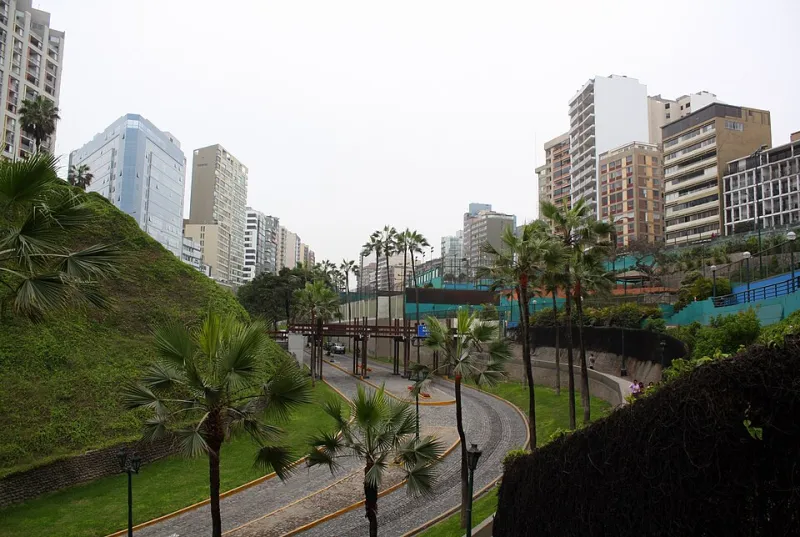
The Microclimate Dividend: How Living in a Natural Wind Corridor Pays You Back Every Month
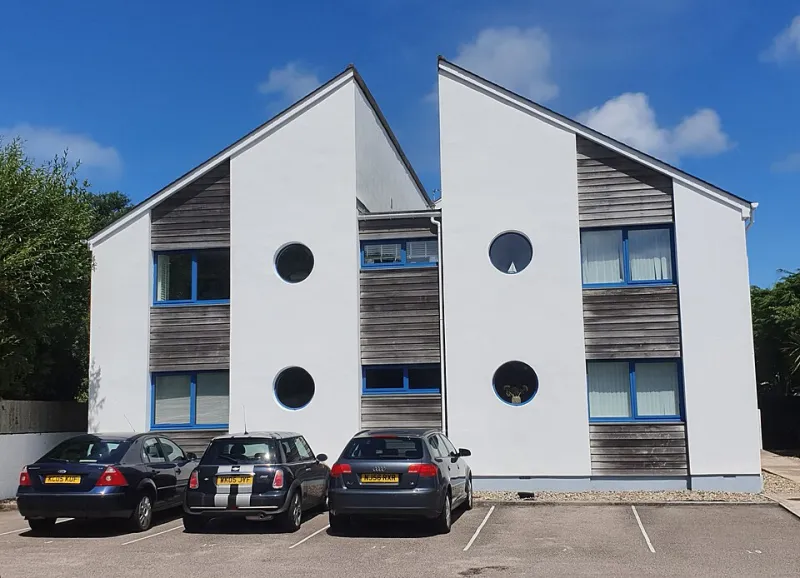
Photo: Mutney, CC BY-SA 4.0, via Wikimedia Commons
A Different Kind of Return on Investment
When buyers evaluate a residential purchase, the financial conversation tends to focus on familiar variables: price per square foot, projected appreciation, HOA fees, and mortgage rates. Utility costs enter the discussion only as an afterthought, if at all — a line item too small, it seems, to influence a decision of this magnitude.
That framing deserves a second look. For residents of a well-sited, naturally ventilated development, energy expenditure is not a fixed cost that varies only with the weather and the utility company's rate schedule. It is a variable that the building's design actively shapes — and in a community like Gowra Urban Winds, that design works consistently in the resident's favor.
The mechanism is not exotic technology or experimental infrastructure. It is something far more fundamental: the intelligent use of the microclimate that surrounds the building.
What a Microclimate Is — and Why It Matters
The term "microclimate" refers to the localized atmospheric conditions that exist in a specific area, often differing meaningfully from the broader regional climate. In urban environments, microclimates are shaped by building density, pavement coverage, vegetation, bodies of water, and — critically — the movement of air through and around structures.
The urban heat island effect, familiar to most city dwellers, is itself a microclimate phenomenon: dense construction and dark surfaces absorb solar radiation and re-emit it as heat, raising temperatures in built-up areas by anywhere from 2 to 10 degrees Fahrenheit compared to surrounding suburban or rural areas. This temperature differential has a direct and measurable impact on energy consumption, particularly for cooling.
But the heat island effect is not inevitable. Developments positioned within natural wind corridors — areas where prevailing air movement is preserved and channeled rather than blocked by construction — experience significantly moderated temperatures. The continuous movement of air carries heat away from building surfaces, reduces the accumulation of thermal mass in surrounding pavements and facades, and delivers cooler, fresher air to residents at precisely the times of day when cooling demand would otherwise peak.
Gowra Urban Winds was sited and designed with this dynamic in mind. The result is a residential microclimate that is measurably cooler in summer and more temperate year-round than comparable developments in more enclosed urban locations.
The HVAC Equation
Heating, ventilation, and air conditioning systems represent the single largest category of energy consumption in American residential buildings, accounting for roughly 40 to 50 percent of total household energy use according to the U.S. Department of Energy. For apartment dwellers in climates with hot summers — which describes a substantial portion of the continental United States — mechanical cooling alone can account for a disproportionate share of that figure during peak months.
The relationship between ambient temperature and HVAC demand is not linear; it is exponential. A building whose exterior surface temperature is consistently 5 to 8 degrees lower than that of a comparable structure in a stagnant urban location does not require 5 to 8 percent less cooling — it may require 20 to 30 percent less, because the mechanical system spends less time running at full capacity and recovers more quickly between cycles.
For residents of naturally ventilated mid-rise homes, this translates into something tangible: the ability to rely on open windows and cross-ventilation for a significantly greater portion of the year. In many U.S. markets, a home positioned within an active wind corridor can realistically reduce its mechanical cooling runtime by 30 to 45 percent compared to a sealed building in a denser, less aerated location. At average residential electricity rates — which, as of recent reporting, sit above 16 cents per kilowatt-hour nationally and considerably higher in many major metropolitan areas — that reduction compounds into meaningful annual savings.
For a two-bedroom unit running a central system, the difference can approach $600 to $900 per year. Over a ten-year ownership horizon, and accounting for the continued upward trajectory of utility rates, that figure becomes a serious component of the total cost-of-ownership calculation.
The Carbon Dimension
For a growing segment of American homebuyers, the financial case is necessary but not sufficient. Environmental impact matters — not as an abstraction, but as a concrete consideration that influences purchasing decisions alongside price and location.
The carbon math associated with reduced HVAC dependence is straightforward. Electricity generation in the United States still carries a significant carbon intensity, even as the grid continues its transition toward renewable sources. Every kilowatt-hour not consumed represents a real reduction in emissions — one that, when aggregated across a multi-unit development, becomes substantial.
A conservatively estimated 35 percent reduction in cooling energy consumption for a building of Gowra Urban Winds' scale translates into tens of thousands of kilowatt-hours saved annually across the development. At current average grid carbon intensity figures, that corresponds to a reduction of several hundred metric tons of CO₂-equivalent emissions per year — the equivalent of removing dozens of passenger vehicles from the road.
For buyers who track their personal environmental footprint, or who are motivated by the broader imperative of reducing residential emissions in American cities, this is not a marginal benefit. It is a core feature of the living experience.
Passive Design Principles at Work
The energy and environmental benefits described above do not require active intervention from residents. They are embedded in the building's passive design — the orientation of the structure relative to prevailing winds, the placement and sizing of operable windows to maximize cross-ventilation, the use of exterior shading elements to reduce solar heat gain during peak afternoon hours, and the integration of landscaping that cools the immediate surroundings through evapotranspiration.
Passive design is, in many respects, the most durable form of energy efficiency. It does not depend on equipment that can malfunction, technology that can become obsolete, or resident behavior that can vary. It simply works, year after year, as long as the building stands.
At Gowra Urban Winds, these principles were incorporated at the design stage rather than retrofitted after construction — a distinction that matters both for performance reliability and for long-term maintenance costs.
Utility Costs as a Valuation Factor
Real estate valuation methodology in the United States has been slow to formally incorporate operating costs into property pricing models, but that is beginning to change. Green building certifications, energy efficiency ratings, and utility cost disclosures are increasingly influencing buyer behavior and, consequently, market pricing.
Research from the National Association of Realtors and various academic institutions consistently finds that energy-efficient homes command price premiums in resale markets — premiums that, in many cases, exceed the cost of the efficiency measures themselves. As utility rates continue to rise and buyer awareness of operating costs grows, this premium is likely to strengthen.
For buyers evaluating Gowra Urban Winds, the microclimate advantage is therefore not merely a monthly budget benefit. It is a component of the property's long-term value proposition — one that becomes more apparent, not less, as the years pass.
Living Lighter, Without Giving Anything Up
The conventional narrative around sustainable living asks residents to accept trade-offs: smaller spaces, fewer amenities, reduced comfort. The experience of living within a natural wind corridor inverts that narrative entirely.
At Gowra Urban Winds, the path to a lower energy bill and a reduced carbon footprint runs directly through a more comfortable, more open, and more connected way of living. The breeze that cools your home on a July afternoon is the same breeze that animates the landscaping outside your window and carries the ambient sounds of the city to a comfortable distance.
That is the microclimate dividend — and unlike most returns, it pays out every single month.