Priced by the Foot, Valued by the View: The Quiet Rise of America's Outdoor Square Footage
There was a time when a balcony in an American residential listing was treated as a footnote — mentioned after the granite countertops, the walk-in closets, and the stainless appliances. Today, it is often the headline. Private outdoor space has become one of the most closely watched features in the US housing market, and the numbers explain why.
The Demand Shift, Measured
Multiple industry surveys conducted since 2020 have documented a decisive change in buyer priorities. In national polls of prospective homebuyers, private outdoor space now consistently ranks among the most desired features in attached and multi-family homes — frequently ahead of dedicated home offices, extra bedrooms, and updated kitchens. Listing platforms have reported sustained year-over-year growth in searches filtering for balconies, patios, and terraces.
What began as a pandemic-era adjustment has hardened into a durable preference. Remote and hybrid work arrangements remain entrenched for a substantial share of the American workforce, and buyers who spend more hours at home have recalibrated what "enough space" means. A residence that opens to fresh air — even forty additional square feet of it — reads less like a luxury and more like a functional requirement.
The Resale Arithmetic
For investors and owner-occupants alike, the interesting question is what this demand does to value. Appraisal and brokerage data suggest that comparable units with usable private outdoor space routinely command a premium over those without — often in the range of five to fifteen percent depending on market, exposure, and the quality of the space itself.
Several dynamics drive this spread:
- Scarcity. In dense urban submarkets, zoned outdoor space is structurally limited. Demand can rise; supply largely cannot.
- Effective square footage. A well-designed balcony extends the usable floor plan at a fraction of the cost per square foot of interior space.
- Liquidity. Units with terraces and loggias tend to move faster, reducing days-on-market — a meaningful consideration for anyone planning a future resale.
Appraisers have taken note as well, with outdoor living space increasingly weighted in valuation models for multi-family properties rather than treated as incidental.
From Ledge to Living Room
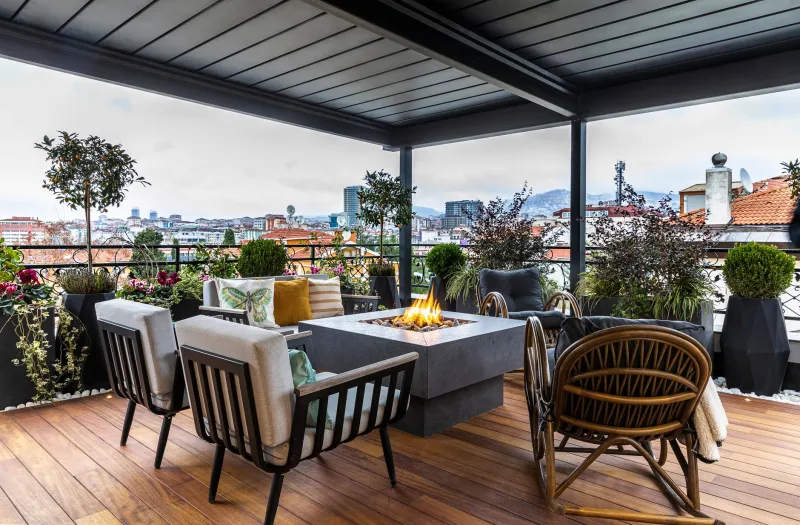
Not all balconies are created equal, and the market has grown discerning about the difference. A narrow ledge wide enough for two folding chairs is not the same as a loggia deep enough to hold a dining table, planters, and a reading chair. Buyers have learned to ask whether the outdoor space is genuinely usable — sheltered from wind and noise, oriented toward light, and connected to the interior by wide openings rather than a single door.
This is where design philosophy matters. At Gowra Urban Winds, the balcony is conceived as a true extension of the living area rather than an appendage. Generous depth, seamless thresholds, and the development's natural wind-corridor orientation mean these spaces remain comfortable through more of the year — which, in valuation terms, is precisely what converts nominal square footage into square footage that earns its premium.
What Buyers Should Weigh
For prospective purchasers evaluating the balcony economy, a few practical criteria separate a strong asset from an underperforming one:
- Depth over width. Six feet of depth accommodates furniture and movement; three feet accommodates little else than a railing.
- Orientation and airflow. Spaces that capture breeze without becoming wind tunnels extend the usable season.
- Integration. Sliding or folding glass walls that open the interior to the terrace multiply the value of both.
- Privacy and sightlines. Outdoor space you actually use is space that feels sheltered, not exposed.
The Takeaway
American housing has always traded in square footage, but the definition of valuable square footage has expanded — literally — beyond the walls. Private outdoor space now carries measurable weight in both purchase decisions and resale outcomes, and developments designed around that reality are positioned accordingly.
For buyers at Gowra Urban Winds, the balcony is not an upgrade checkbox. It is part of the floor plan, part of the investment case, and, on the right evening, the best seat in the house.