Forty Square Feet, Fully Furnished: Why the Smartest Room at Gowra Urban Winds Has No Ceiling
Ask an appraiser to measure a home and the balcony barely registers. Ask an interior designer the same question, and you'll get a very different answer.
"The balcony is the only room in the house with a skyline view, fresh air, and no television," says one Chicago-based designer we spoke with while researching this piece. "It deserves furniture, lighting, and a point of view — not a folding chair and a dead fern."
At Gowra Urban Winds, where the site plan channels natural airflow through the building's mid-rise profile, balconies stay comfortable for a far larger share of the year than most buyers expect. That changes the design math entirely. If your outdoor space is usable ten months a year instead of four, it stops being a garnish and starts being a room.
Rethinking What Counts as Livable Space
The first shift is mental, not material. Designers suggest walking your balcony with the same eye you'd bring to a spare bedroom: Where does light fall? Where's the sightline? What do you actually want to do out here — read, dine, work, entertain?
The answer shapes everything. A balcony meant for morning coffee needs different furniture than one hosting Saturday dinners. Resist the urge to buy a full patio set before you've lived with the space for a month.
The Foundation: Weatherproof Everything
Outdoor furniture has come a long way from the resin chairs of suburban patios. Powder-coated aluminum, all-weather wicker, and teak alternatives now look indoor-grade while shrugging off rain and UV exposure. Key picks:
- Seating with storage. Benches that open to stash cushions double your utility in tight footprints.
- Quick-dry cushions. Solution-dyed acrylic fabrics (Sunbrella is the category leader) resist fading and mildew.
- Foldable or stackable pieces. Flexibility matters more than permanence in 40 square feet.
In a wind-corridor building like Gowra Urban Winds, weight matters. Choose pieces with some heft or anchoring ability — nothing ends a relaxing evening like a side table relocating itself.
Shade and Wind: Design With the Airflow, Not Against It
Most urban balconies fight for breezes. Yours arrives by design. That's a luxury, but it means shade strategy should favor permeable solutions. A solid umbrella can behave like a sail; a shade sail, retractable canopy, or louvered screen gives you control without resistance.
Privacy screens in slatted bamboo or powder-coated metal also serve as windbreakers on gustier days, letting you fine-tune the microclimate at the edge of your living room.
Container Gardens That Actually Survive
Nothing transforms a balcony faster than plants — and nothing kills enthusiasm faster than plants that die in week three. Designers recommend starting with three principles:
- Match plants to light, not aspiration. Herbs and sedums for full sun; ferns and hostas for shade.
- Go big on fewer pots. One substantial planter outperforms a dozen small ones, both visually and for root health.
- Self-watering planters are not cheating. They're the difference between a jungle and a graveyard, especially if you travel.
Native and drought-tolerant species — think coneflowers, ornamental grasses, rosemary — thrive in exposed conditions and support local pollinators. A railing planter of trailing ivy geraniums delivers maximum drama per dollar.
Lighting: The Cheapest Transformation Available
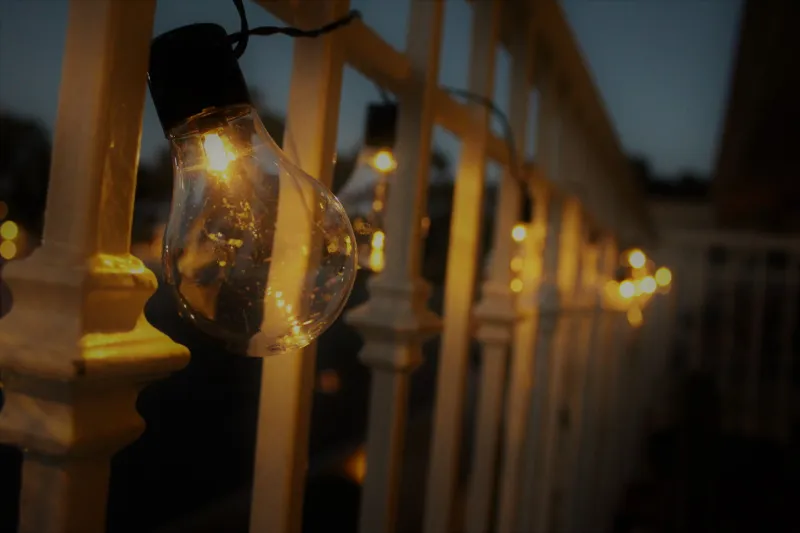
If you change one thing, change the lighting. A strand of warm-white outdoor string lights, a solar lantern cluster, or a single rechargeable LED lamp converts a balcony from "storage with a view" to "destination" in under an hour. Aim for warm color temperatures (2700K) and layered sources at different heights. Skip anything you can't leave out in a storm.
Three Budget Tiers, One Outcome
The $300 refresh. Two folding café chairs, one weatherproof rug, string lights, and a pair of large planters. This alone changes how you use the space.
The $1,500 upgrade. Add a storage bench, a shade sail with hardware, self-watering planters, and a proper outdoor lantern. Now you're eating dinner out here.
The $4,000 transformation. All-weather sectional, motorized retractable shade, an outdoor-rated heater or fire table where regulations allow, and a layered lighting plan. At this level, the balcony earns its place on your floor plan.
The Before and After That Sells It
The classic transformation follows a predictable arc: bare concrete and a lone grill become a rug-defined sitting zone, a two-seat bistro set angled toward the view, greenery at three heights, and light at eye level. The square footage never changes. The perception of it does.
Buyers touring mid-rise properties should ask a simple question in every unit: How many months a year would I actually use this? In a home designed around natural airflow, the honest answer stretches the calendar — and the value of every furnishing dollar you put out there.
The best room in your home might be the one without walls. Treat it accordingly.