Reading the Wind: How to Evaluate an Airflow Report Before You Trust the Brochure
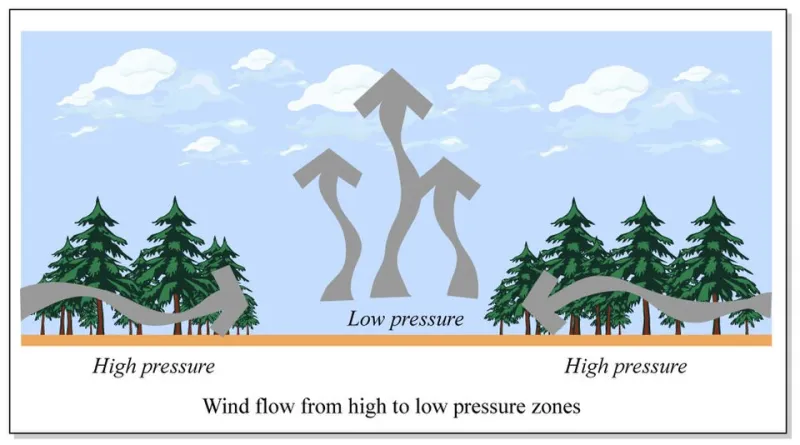
Photo: mitopencourseware, CC BY-SA 4.0, via Wikimedia Commons
Every mid-rise brochure in America now seems to arrive with a wind diagram attached — a swirl of blue arrows, a pleasant gradient from green to gold, and a caption promising "optimized natural ventilation." The graphic is attractive. The question is whether it means anything. A wind study, properly done, is one of the most useful documents a buyer can read. Poorly explained or selectively quoted, it is decoration.
This guide is about reading the first kind.
What the Study Is Actually Measuring
A wind study — whether produced by computational fluid dynamics (CFD) modeling or by scale-model testing in a boundary-layer wind tunnel — simulates how air moves around and between buildings under a range of conditions. Reputable studies draw on decades of local weather data, then run the model against many wind directions and speeds rather than a single "design case."
The output is usually expressed as exceedance probability: the percentage of hours per year that wind at a given location will exceed a stated comfort threshold. That framing matters. A report that says "wind speeds remain below 15 mph" is telling you almost nothing unless it also tells you for what share of the year, at what height, and under which seasonal assumptions.
Most professional studies reference comfort criteria such as the Lawson scale, which grades outdoor spaces from sitting-long-term comfort through standing, strolling, and finally unsafe. A plaza rated for leisurely sitting is a very different place from one rated only for brisk walking.
The Numbers That Predict Daily Comfort
Four figures deserve your attention.
First, the sitting-comfort percentage. Ask what share of annual hours the primary outdoor amenity areas — courtyards, terraces, pool decks — meet a sitting-comfort standard. Anything meaningfully above 90 percent is a strong result for an urban site.
Second, the gust factor. Average wind speed is a poor proxy for how a place feels. A corner that averages 8 mph but spikes to 24 mph will empty a rooftop faster than a steady 12 mph breeze. Gust data tells you whether your balcony furniture will stay where you put it.
Third, seasonal distribution. A study reporting annual averages can mask a site that is delightful in July and punishing in February. Request the month-by-month breakdown, particularly if you plan to use outdoor space year-round.
Fourth, the vertical profile. Wind accelerates with height and behaves very differently at the fifth floor than at the fifteenth. If the report addresses only pedestrian level, it has not answered the question a balcony owner actually cares about.
Where Brochures Go Quiet
Marketing summaries tend to omit three things. They rarely disclose who commissioned the study — a developer-funded model is legitimate but is not an independent audit. They seldom mention mitigation measures that were modeled but not built, such as proposed screen walls or landscape buffers that were value-engineered out after the study was finalized. And they almost never reveal that the model was run against an earlier design revision than the one under construction.
None of these omissions is necessarily sinister. All of them are reasons to read the underlying document rather than the summary panel.
Seven Questions Worth Asking
- May I see the full report, not the executive summary?
- Which comfort criteria were applied, and who set them?
- Does the study reflect the current construction drawings?
- Were mitigation elements modeled, and are they in the final scope of work?
- What are the results at balcony height, not only at grade?
- How does the model handle the neighboring buildings planned for the adjacent parcels?
- Was the analysis reviewed by a third party unaffiliated with the design team?
A sales team that answers these readily is a meaningful signal in itself.
Verifying Claims on Your Own
You do not need a wind tunnel to sanity-check a study. Visit the site — or a comparable block — on a gusty afternoon and note where debris collects, which corners whistle, and whether anyone is actually sitting outside. Ask residents of a completed building by the same architect how the outdoor spaces perform in March. Check whether local zoning or green-building programs required the study in the first place; mandated studies tend to be more rigorous than voluntary ones.
Gowra Urban Winds was planned around a documented natural wind corridor, and the development's airflow modeling is central to how its outdoor spaces were sized and oriented. That is precisely why buyers should hold it — and every comparable project — to a verifiable standard. A claim you can audit is worth more than a diagram you cannot.
The Bottom Line
A wind study is not a marketing asset. It is an engineering document that predicts whether you will actually use the outdoor space you are paying for. Learn its vocabulary, request the full version, and compare its assumptions against the building you will inhabit. The breeze will do the rest — or it won't, and now you will know before closing day rather than after.