Twelve Cities, One Balcony: What Private Outdoor Space Really Costs Across America
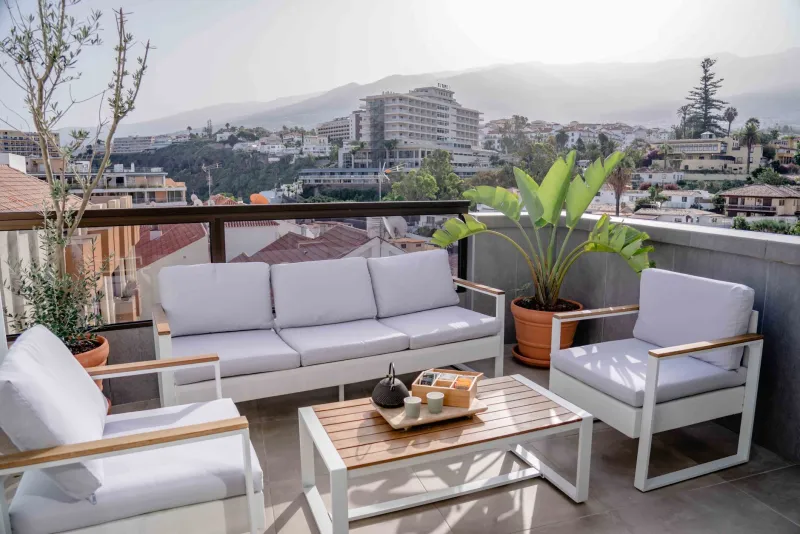
Ask any American homebuyer what tops their wish list and you will hear a familiar chorus: light, space, and somewhere outside to drink morning coffee. Yet the third item — private outdoor space — is the one most often priced in ways buyers never fully examine. A balcony is rarely listed as a line item. It is folded into the price per square foot, obscured by finishes and views, and left unexamined until closing day.
We decided to make the invisible visible. Using typical 2024 pricing for mid-rise condominiums in twelve major US markets, we estimated what forty square feet of private outdoor space effectively costs a buyer in each city. The results say a great deal about where value lives — and where it merely poses.
The Method Behind the Numbers
To keep the comparison honest, we held the product constant: a mid-rise condominium, one to two bedrooms, in a desirable but not trophy neighborhood, with a usable private balcony of roughly forty square feet. We then applied prevailing price-per-square-foot figures for each metro, adjusted for the common industry practice of counting a portion of balcony area in the unit's total square footage.
The exercise is imperfect by design — real estate resists spreadsheets — but the relative gaps between markets are instructive.
What Forty Square Feet Costs, City by City
- New York City (Manhattan): $1,500–$2,000 per square foot. That balcony, in effect, carries a price tag of $60,000 to $80,000 — before monthly common charges.
- San Francisco: $1,100–$1,400 per square foot, placing the same outdoor space near $50,000.
- Boston: $900–$1,100 per square foot. Expect roughly $40,000 for the privilege of two chairs and a railing.
- Seattle: $700–$850 per square foot, or about $30,000.
- Los Angeles: $650–$800 per square foot, in the $28,000 range.
- Miami: $600–$750 per square foot, around $27,000 — with insurance premiums to consider.
- Austin: $450–$550 per square foot, approximately $20,000.
- Denver: $500–$600 per square foot, near $22,000.
- Chicago: $400–$500 per square foot, roughly $18,000.
- Philadelphia: $350–$450 per square foot, about $16,000.
- Atlanta: $350–$420 per square foot, close to $15,000.
- San Antonio: $250–$320 per square foot, or as little as $11,000.
The spread is remarkable: nearly a sevenfold difference between the most and least expensive markets for an identical patch of concrete and railing.
What Buyers Get for the Money Elsewhere
A $60,000 balcony premium in Manhattan might, in San Antonio or Atlanta, fund an entire additional room, a renovated kitchen, or a meaningful down payment on a second property. In Boston, the same sum could cover years of commuting costs, tuition contributions, or a substantial retirement investment. The question every buyer should ask is not whether a balcony is worth having, but whether the local market is charging a fair toll for it.
Why Air and Light Change the Calculation
Price per square foot rewards interiors. But the lived experience of a home — the reason buyers fall in love during a showing — often comes down to what surrounds the square footage: airflow, daylight, sightlines, and quiet. A home designed around a natural wind corridor delivers the benefits of outdoor connection even when the balcony itself is modest.
This is the principle behind Gowra Urban Winds. Rather than charging metropolitan premiums for a few feet of railing, the community is engineered so that open air is a structural feature, not an upsell. Cross-ventilation, elevated sightlines, and thoughtfully oriented common outdoor spaces extend the sense of openness throughout the home.
The Rational Buyer's Takeaway
Compare markets on what you actually experience, not merely what you occupy. In high-cost cities, outdoor space functions as a luxury good with a luxury markup. In a purpose-built mid-rise community, it can be a baseline — designed in from the first blueprint rather than added to the invoice.
For buyers weighing a move, the arithmetic favors looking closely at developments where airflow, light, and community outdoor space are treated as essentials. Forty square feet is a small number. Where you buy it makes all the difference.